770-664-1999


A baby’s first tooth is an exciting milestone, but it also signals the start of a new daily responsibility. A first tooth dental routine baby plan can help parents build simple habits before brushing becomes a struggle. At Crabapple Pediatric Dentistry & Orthodontics in Alpharetta, families can get guidance on infant oral care and learn how to make dental visits feel normal from the beginning.
When Should Parents Start Cleaning a Baby’s Teeth?
Parents do not need to wait for a full set of teeth.
Once the first tooth appears, gentle cleaning should become part of the baby’s daily routine. Before teeth erupt, parents can also wipe the baby’s gums with a clean, soft cloth.
The American Academy of Pediatric Dentistry recommends that children establish a dental home by 12 months of age, and it encourages an early visit around the time the first tooth appears.
Early dental visits can help parents establish healthy habits before problems develop, while an Alpharetta orthodontist for kids can provide guidance as your child’s teeth and bite develop.
Make Brushing a Normal Part of the Day
Babies often resist new sensations.
A toothbrush feels strange at first, so parents should expect some adjustment. Instead of turning brushing into a battle, introduce it gradually and calmly.
Keep the Routine Simple
Try connecting brushing with another daily activity.
For example:
- Brush after the morning routine.
- Brush before bedtime.
- Use the same toothbrush location.
- Let the baby see the toothbrush before using it.
- Keep the brushing time calm.
- Use a soft infant toothbrush.
Consistency matters more than making every brushing session perfect.
How Should Parents Brush Baby Teeth?
Parents should help with brushing because babies cannot clean their teeth effectively on their own.
Use a small, soft-bristled toothbrush designed for infants. Brush gently around all tooth surfaces that are accessible.
As more teeth appear, make sure the routine reaches the front, back, and chewing surfaces.
What About Fluoride Toothpaste?
Fluoride toothpaste can play an important role in preventing tooth decay.
However, the amount matters for young children. Parents should follow guidance from their child’s pediatric dentist regarding the appropriate amount based on age and individual needs.
The AAPD recommends age-appropriate oral hygiene and fluoride exposure as part of early childhood caries prevention.
Why Does the First Dental Visit Matter?
A baby’s first dental appointment is not just about checking for cavities.
The visit gives parents an opportunity to learn about tooth development, brushing, feeding habits, fluoride, and other aspects of infant oral health.
The dentist can also examine the mouth and look for early signs of problems.
The Goal Is Familiarity, Not Fear
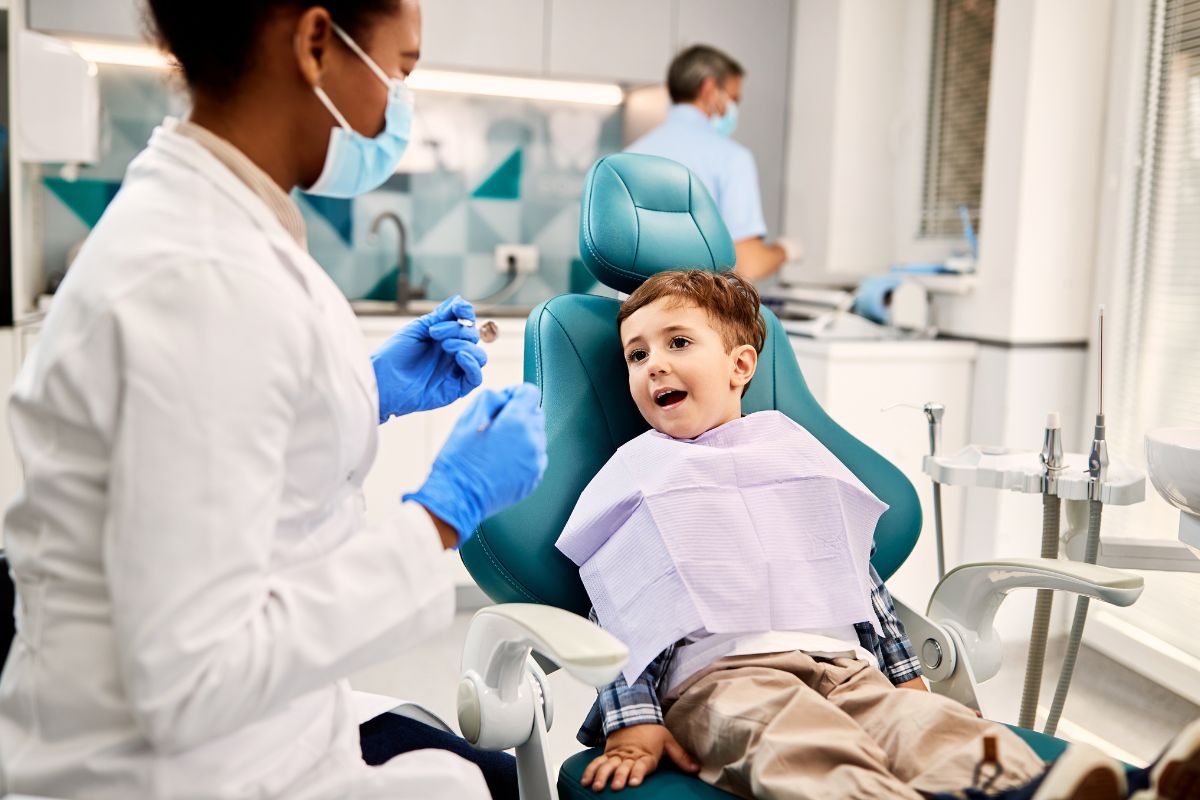
A positive first visit can help children learn that the dental office is a normal place to visit.
Parents should avoid describing the dentist using frightening words. Instead, keep the explanation simple.
You can say that the dentist will look at the baby’s teeth and help keep the smile healthy.
How Can Parents Prevent Dental Fear?
Dental fear does not always come from the dental office itself. Children can also pick up anxiety from adults.
Therefore, parents should pay attention to the language they use.
Helpful Language
Try phrases such as:
- “The dentist will count your teeth.”
- “We will learn how to keep your teeth clean.”
- “The dental team will help you.”
- “You can ask questions.”
Avoid dramatic descriptions of pain or dental instruments.
Also, do not use dental treatment as a threat. Saying “If you do not brush, the dentist will hurt you” can create unnecessary fear.
Feeding Habits Matter Too
Daily feeding patterns can affect oral health.
Frequent exposure to sugary drinks and foods can increase the risk of tooth decay. Parents should discuss feeding habits with the pediatric dentist, especially when a child frequently uses a bottle or sippy cup.
Be Careful With Bedtime Bottles
A baby who falls asleep with a bottle containing milk, formula, juice, or another sugary drink can have prolonged exposure to sugars.
AAPD guidance emphasizes dietary counseling as part of early childhood caries prevention.
If parents have concerns about nighttime feeding, they should ask the child’s pediatric dentist for age-appropriate guidance.
What If the Baby Hates Brushing?
Many babies resist brushing at some point.
That does not mean parents should stop.
Instead, keep the process calm and consistent. Try different positions, such as having the baby lie safely with their head supported. Some parents find it easier to brush when the baby is less distracted.
Give the Baby a Small Role
As the child grows, allow them to hold a second toothbrush.
This can make brushing feel more familiar. However, parents still need to perform or supervise effective cleaning.
A child may want to brush independently long before they have the coordination needed to clean every surface.
Build Dental Visits Into the Family Routine
Regular dental visits should become as ordinary as other preventive health appointments.
The AAPD encourages establishing a dental home no later than 12 months of age. Early visits can provide preventive guidance and help identify concerns before they become more complicated.
What Parents Can Bring to the First Visit
Consider bringing:
- The child’s medical history
- A list of current medications
- Questions about feeding
- Questions about brushing
- Information about fluoride exposure
- Details about thumb sucking or pacifier use
- Any concerns about tooth development
Being prepared can make the appointment more useful.
Habits That Grow With the Child
The routine will change as the child gets older.
A baby may need complete parental assistance. A toddler may want to hold the toothbrush. Later, the child can begin practicing independent brushing while a parent continues to supervise.
The goal is gradual independence.
Keep the Routine Predictable
Children often respond well when daily activities follow a familiar pattern.
For example:
Breakfast → morning brushing → daytime activities → bedtime routine → nighttime brushing
A predictable sequence reduces the need for repeated reminders.
When Should Parents Call the Dentist?
Parents should contact a pediatric dentist if they notice something unusual.
Examples include:
- A tooth appears discolored
- White or brown spots develop
- Gums look swollen
- The child experiences dental pain
- A tooth breaks
- An injury affects the mouth
- A tooth erupts in an unusual position
Parents should not wait for a routine appointment when a child has significant pain, swelling, or a dental injury.
A baby’s first tooth marks the beginning of lifelong oral care habits. Gentle brushing, appropriate fluoride use, healthy feeding routines, positive language, and early dental visits can help children become comfortable with dental care. Most importantly, parents should focus on consistency rather than perfection.
If you want guidance on your baby’s oral health routine or first dental visit, schedule an appointment with Crabapple Pediatric Dentistry & Orthodontics.